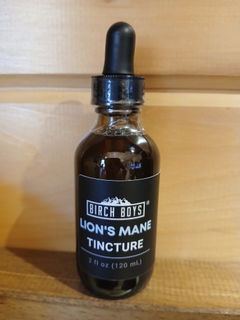
4 products


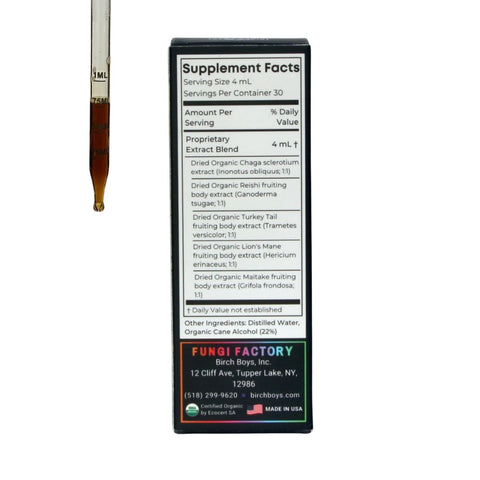


Lion's Mane Health Benefits
It seems like everyone from biohackers to wellness-enthusiasts is suddenly talking about the mushroom known as Lion’s Mane Mushroom — but is the hype really justified? From ancient traditions to the latest research on cognitive support and mood, we dive into whether Lion's Mane truly lives up to its reputation.
Lion's Mane Reviews
Lion's Mane is our most noticeable product, here's what our customers have to say.
"I have been using this product for approximately 6 months. I love it. I am 75 and I was noticing a slight decline in my memory. Being a widow I knew I had to do something. This was the answer. I can definitely tell the difference in my short term memory and I would advise everyone to just give it a try and you will notice a difference."

"This product has improved my mental acuity beyond expectations. I'm no longer trying to think of words that just don't come to me, Math is quicker, memory is better and overall alertness improved. Birch Boys is easy to do business with and very please pleasant. Highly recommend!"

"On the suggestion from a friend I tried the Lion's Mane tincture. I am very happy with the improvement in my "brain fog" I experienced after COVID. I've made it part of my daily routine!"

"After about 3 weeks of taking Lion's Mane, I started to realize I was in a much more positive mood - moreso than I've experienced in a long long long time! In fact, it's been so long that I can't quite recall the last time I've felt "happy". I was wondering why and then finally realized that it must be the Lion's Mane. I guess I was looking out more for the effects to be "cognitive" improvement (like memory). I haven't found that ... but I have discovered a greater sense of peace and less anxiety and fear. Wow! Also only started with 1ml dose, so this positive mood occurred with only the minimal dosage."
Lion's Mane Guides & Resources
Learn about Lion's Mane mushroom benefits, cognitive support, dosage recommendations, and what makes a quality supplement.

Frequently asked questions
Lion's mane (Hericium erinaceus) has been used in traditional East Asian medicine and cuisine for centuries, and it's one of the most studied functional mushrooms in modern research. Two compound families unique to this species keep coming up in the literature: hericenones, concentrated in the fruiting body, and erinacines, found in the mycelium. Both have been investigated for their relationship to nerve growth factor (NGF), a protein involved in neuronal growth and maintenance.
At Birch Boys, we carry lion's mane as a concentrated extract tincture and as a ground coffee blend.
Lion's mane is broadly considered safe and well-tolerated, with human and animal studies reporting few adverse effects. The most commonly noted reactions are mild GI discomfort and, in people with mushroom allergies, skin rashes or breathing difficulty. It's worth noting that many of the more severe reactions reported online tend to trace back to low-quality products of unclear origin, which is why sourcing and third-party testing matter.
Lion's mane extract is lion's mane mushroom in concentrated form. Raw mushrooms have tough cell walls made of a fiber called chitin that the body can't easily break down, which means a lot of the beneficial compounds pass through without being absorbed. Extraction uses water, alcohol, or both to pull those compounds out of the mushroom first, so your body can actually access them. That's what makes an extract meaningfully different from just eating or powdering the raw mushroom.
No. Lion's mane contains no psilocybin, psilocybin, or any other psychoactive compound. It belongs to an entirely different mushroom family from psilocybin-producing species. Its active compounds, hericenones and erinacines, work gradually through the body rather than altering perception or consciousness.
Not all powders are created equal. Some are simply ground dried mushroom with no extraction, meaning the active compounds are largely inaccessible to your body. Others are true extract powders, which are more concentrated, though liquid extracts are still more bioavailable than any powder form. Learn more about mushroom extract powder quality concerns.
You don't have to. Most people add it to coffee, tea, or another beverage as part of their morning routine. If you experience any stomach discomfort, try taking it with food.
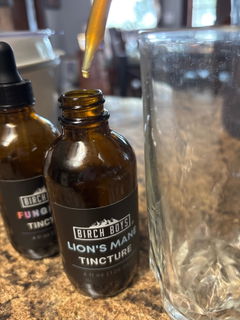
Take 1 to 4 ml daily, either directly or added to coffee, tea, or any beverage at a comfortable drinking temperature. If you're new to mushroom extracts, start at 2 mL and increase as comfortable. For a full walkthrough on building a tincture routine, visit our mushroom extract guide.